

Mural paintings are authentic testimonies to history. Their colours, materials and techniques allow us to reconstruct the artistic knowledge and practices of other eras, but they also make them particularly vulnerable to deterioration. Understanding how they age and how to preserve their integrity remains one of the great challenges of heritage conservation.
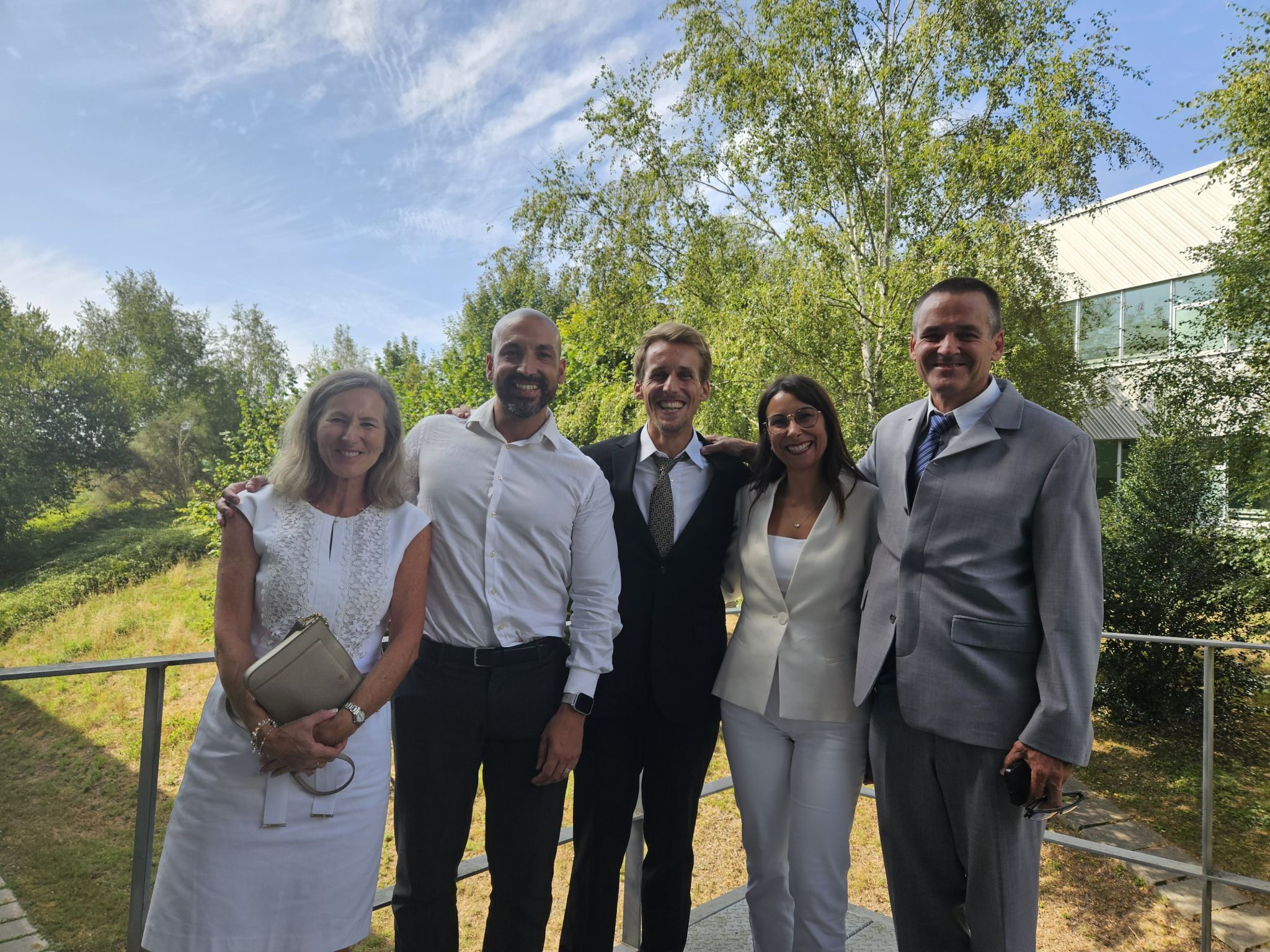
It is against this backdrop that the doctoral thesis by Daniel Jiménez Desmond, a researcher with the GESSMin group at CINTECX, supervised by José Santiago Pozo Antonio (University of Vigo) and Anna Arizzi (University of Granada), is set. Entitled From fresco technique to restoration practice: stability of copper-based pigment and performance of nanosilica-based chromatic reintegration, the work combines art history, materials science and heritage conservation to explore the behaviour of mural paintings in greater depth and develop new tools for their restoration.
From the laboratory to historic walls: understanding deterioration to improve restoration
One of the key findings of the research relates to copper pigments, which have been widely used throughout history for their green and blue hues. Although they form part of some of the most iconic wall decorations in our historical heritage, these pigments can, over time, undergo a blackening process that radically transforms the original appearance of the works.
Until now, this phenomenon had been attributed mainly to the formation of tenorite (CuO), a dark-coloured copper oxide. However, the results obtained by Jiménez Desmond reveal that the process is considerably more complex. The study demonstrates that other phases of copper oxides, reduced copper species and factors linked to the pigments’ own characteristics—such as their chemical composition, origin or the presence of impurities—also play a role in the deterioration.
This knowledge helps to explain why murals created with seemingly similar pigments can exhibit very different behaviours after centuries of exposure to different environmental conditions. Furthermore, it provides valuable information for better identifying the causes of deterioration and facilitating the design of more effective conservation interventions.
New tools for the sustainable conservation of Heritage
The research also challenges the traditional view of fresco painting as a homogeneous and standardised technique. The findings highlight the diversity of materials and procedures used historically, a reality that helps to provide a better understanding of both the richness of these artistic expressions and the specific conservation challenges they present.
Alongside these advances in our understanding of historical materials, the thesis explores new solutions for the restoration of cultural heritage. Specifically, it evaluates an innovative chromatic reintegration technique designed for the in situ conservation of wall paintings exposed to the elements. The methodology uses nanosilica as a binder, a material that enables the visual legibility of the works to be restored whilst respecting the principles of compatibility and minimal intervention that guide contemporary conservation.
The tests carried out show that this technique shows promising results and could become an effective and sustainable alternative for the restoration of murals within historic buildings and monuments.