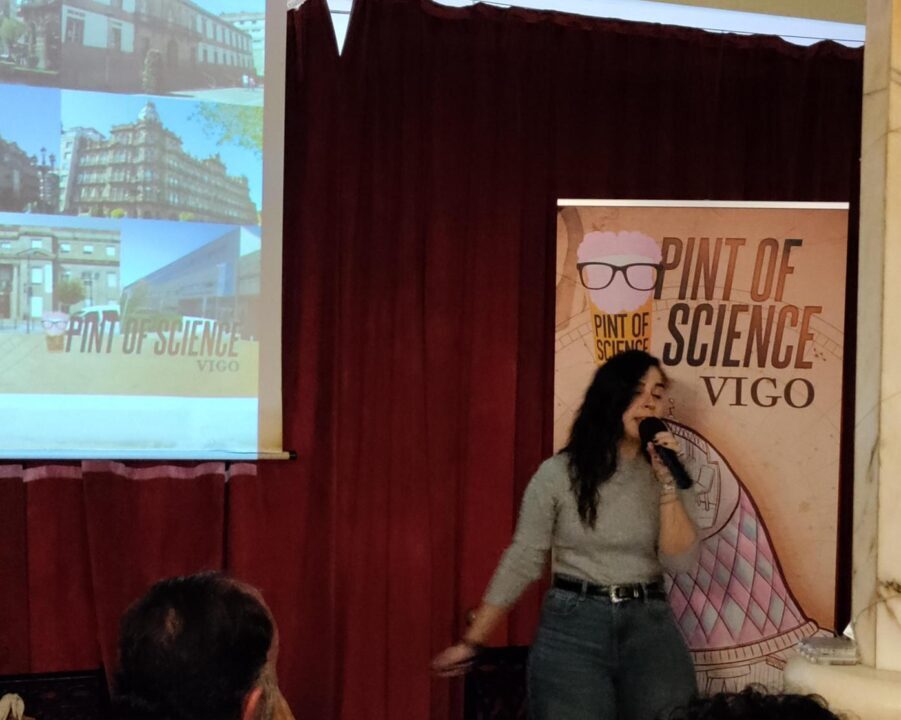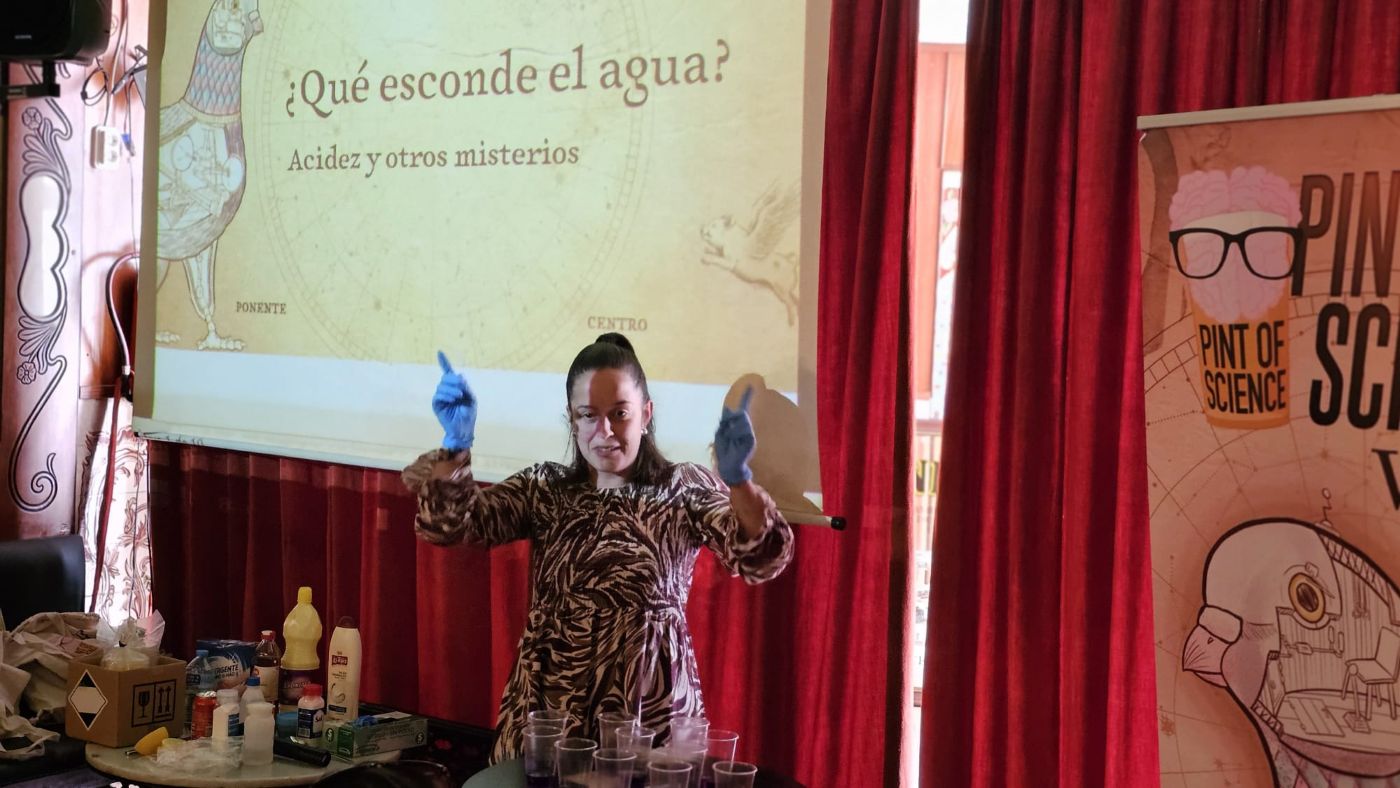
La ciencia volvió a salir del laboratorio para encontrarse con la ciudadanía en una nueva edición de Pint of Science en Vigo, con la participación de las investigadoras de CINTECX María Pazo y Patricia González Cabaleiro, que acercaron la investigación al público en un ambiente cercano, participativo y distendido.
Por primera vez, el festival incorporó la iniciativa Pint Kids: Ciencia Miúda, una propuesta pensada específicamente para el público infantil. En este marco, María Pazo logró captar la atención de los más pequeños en el Café de Catro a Catro con la charla “¿Qué esconde el agua? Acidez y otros misterios”, una sesión tan didáctica como divertida en la que la ciencia se explicó a través de experimentos visuales y coloridos.
Durante la actividad, las niñas y niños aprendieron a medir el pH utilizando una escala de colores y pudieron observar el nivel de acidez o basicidad de productos cotidianos y alimentos como el limón, el vinagre, el gel de ducha o algunos refrescos, respondiendo a la pregunta clave: ¿ácido o básico?. Además, la investigadora explicó de forma muy visual conceptos como la solubilidad de determinados minerales en el agua en función de su pH y cómo los elementos muy ácidos pueden afectar a la corrosión de ciertos materiales.
La charla sirvió también para transmitir un mensaje fundamental: el agua es mucho más que lo que sale del grifo o cae del cielo. A través de ejemplos sencillos, María Pazo explicó que la contaminación del aire o del suelo acaba llegando inevitablemente a ríos y mares, y que para proteger la salud humana y la de los ecosistemas, los científicos analizan el agua buscando “pistas” como su acidez o la presencia de bacterias dañinas. Con ello, el grupo de pequeños participantes asumió su misión como investigadora: examinar muestras y descubrir cómo ayudar a que el ciclo del agua se mantenga limpio.
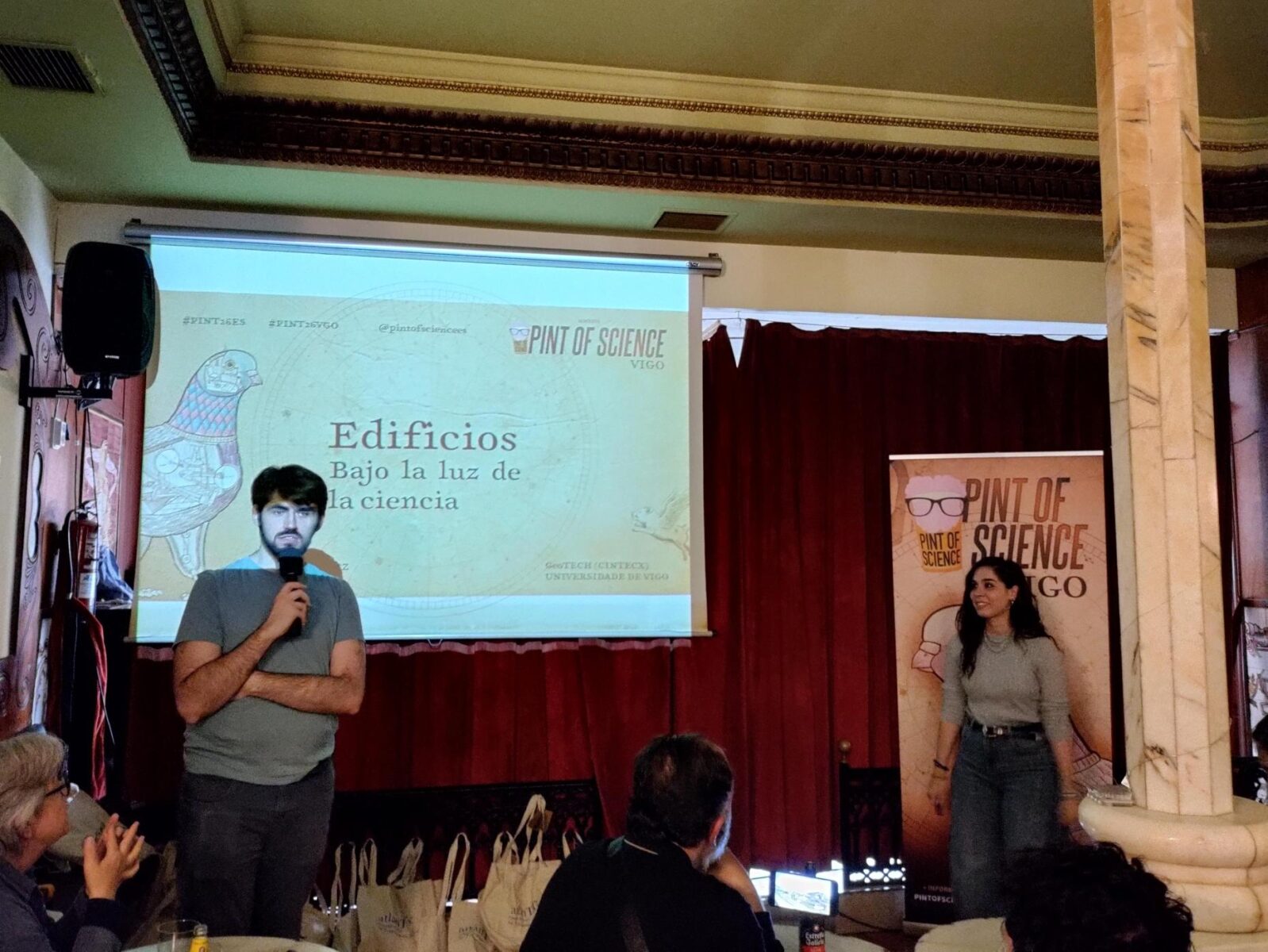
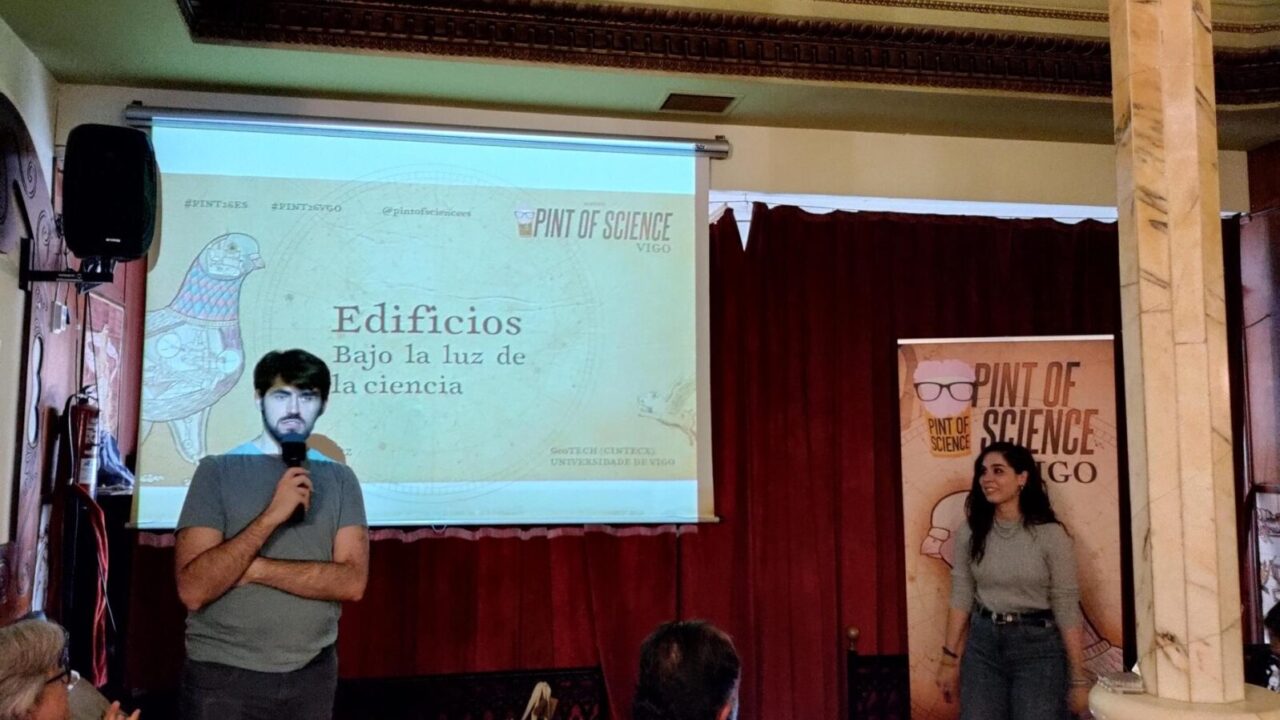
Edificios bajo la luz de la ciencia
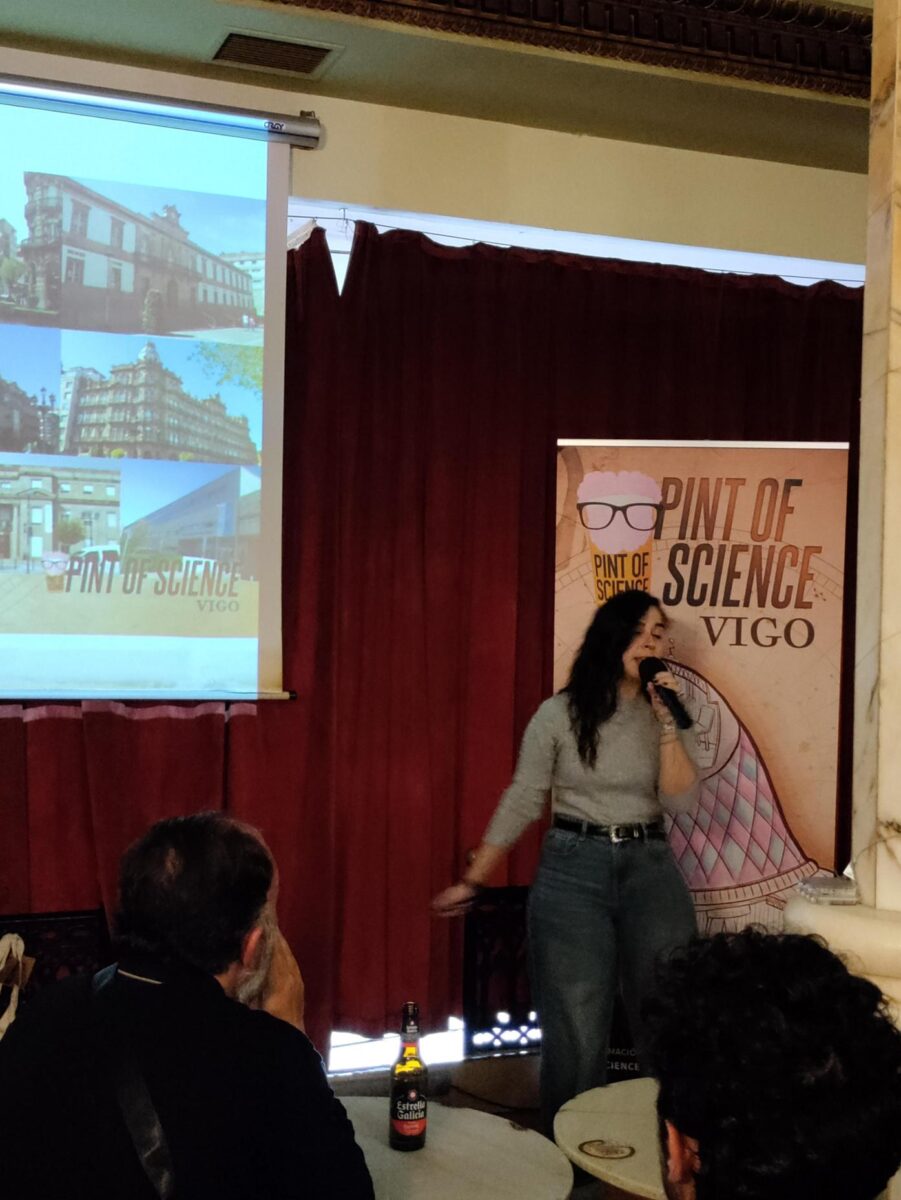
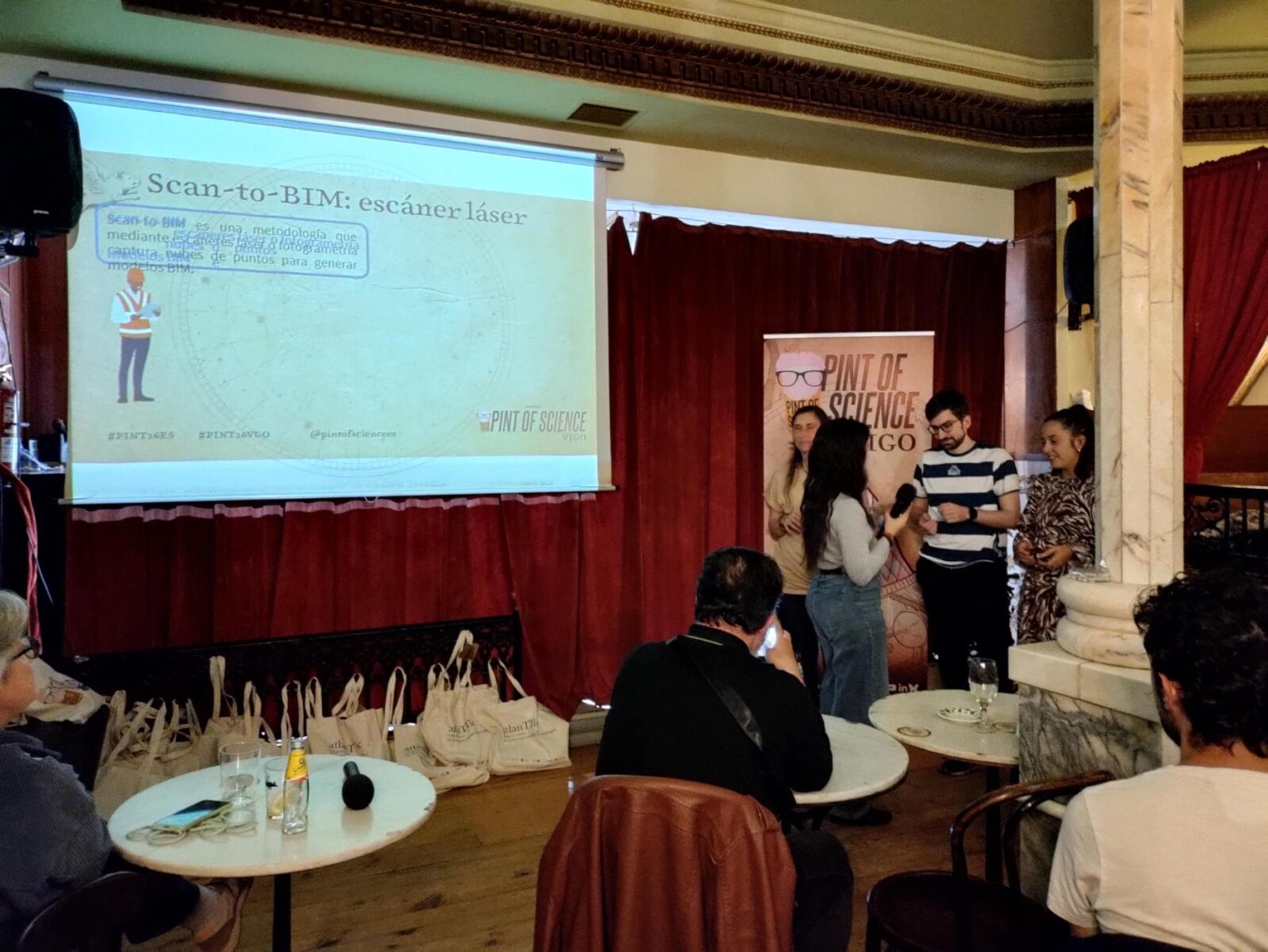
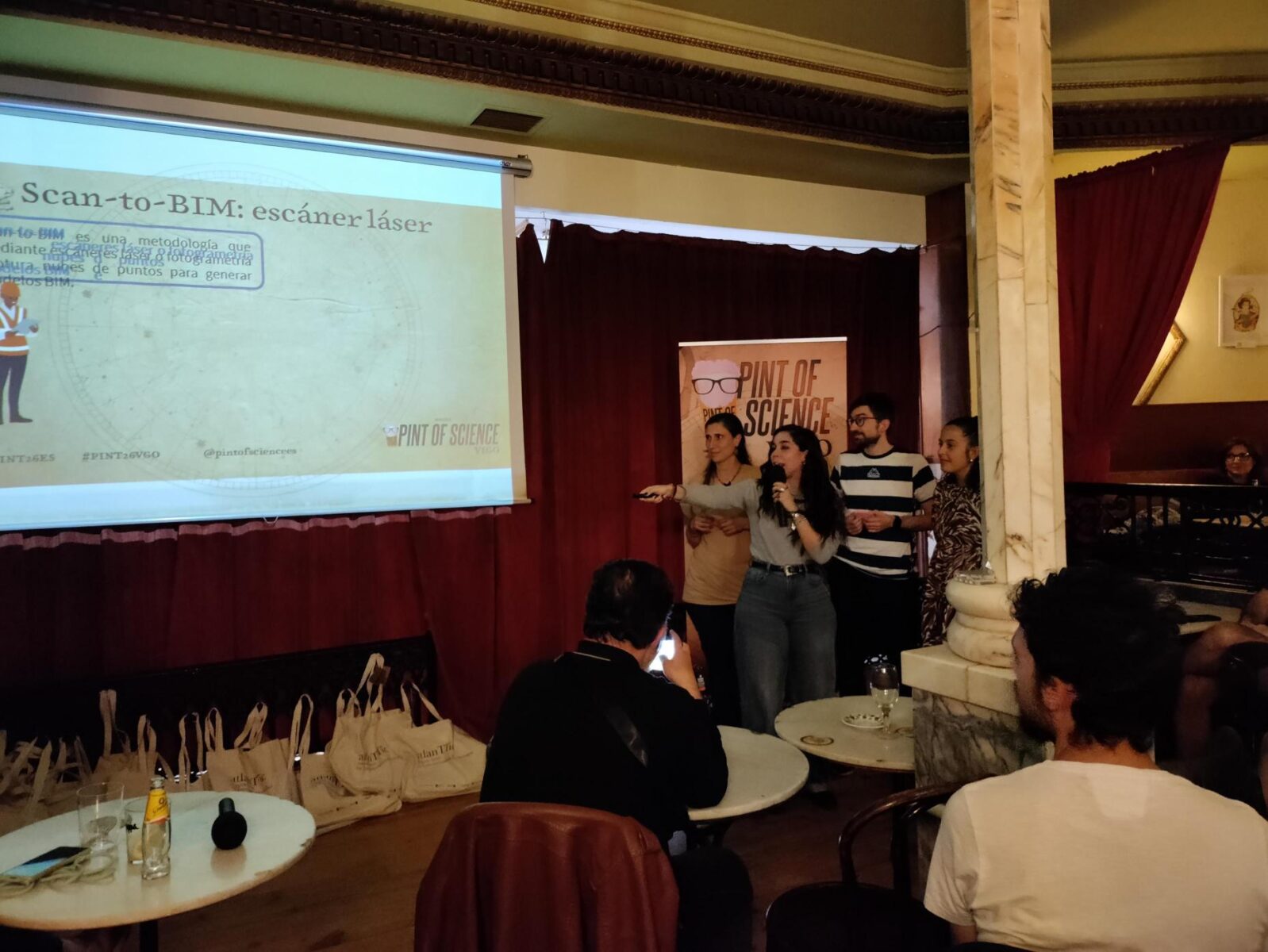
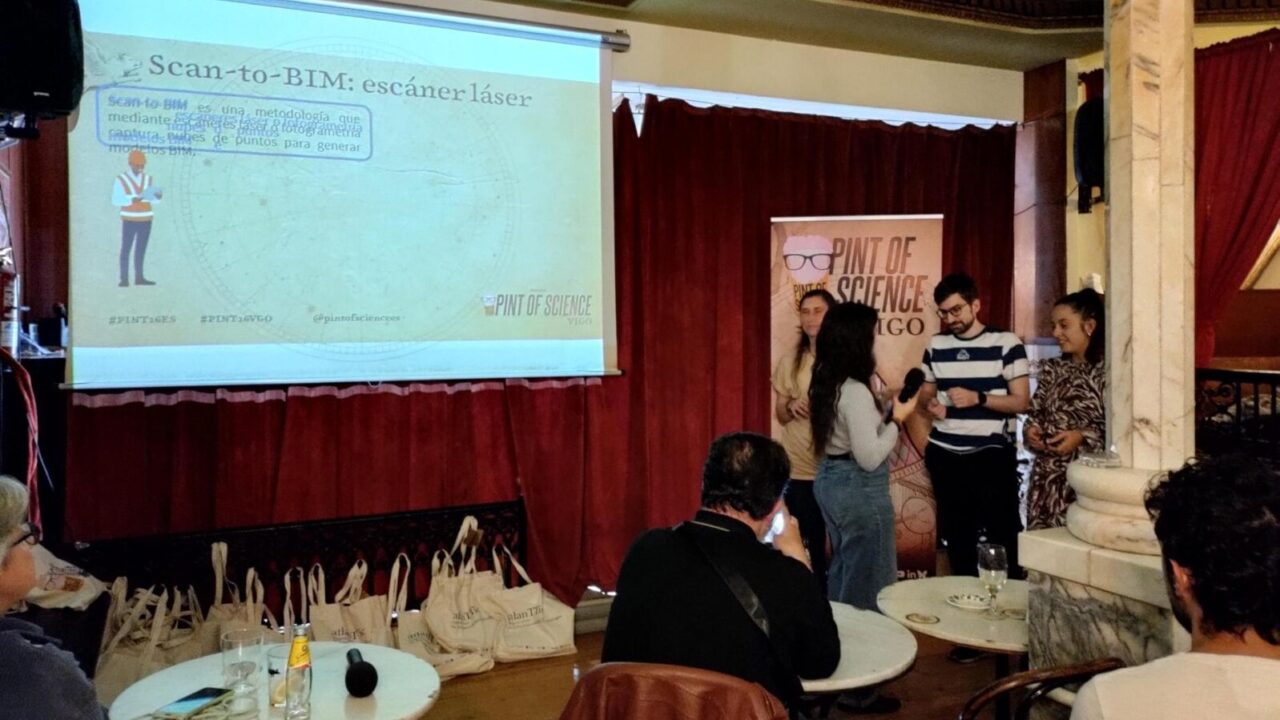
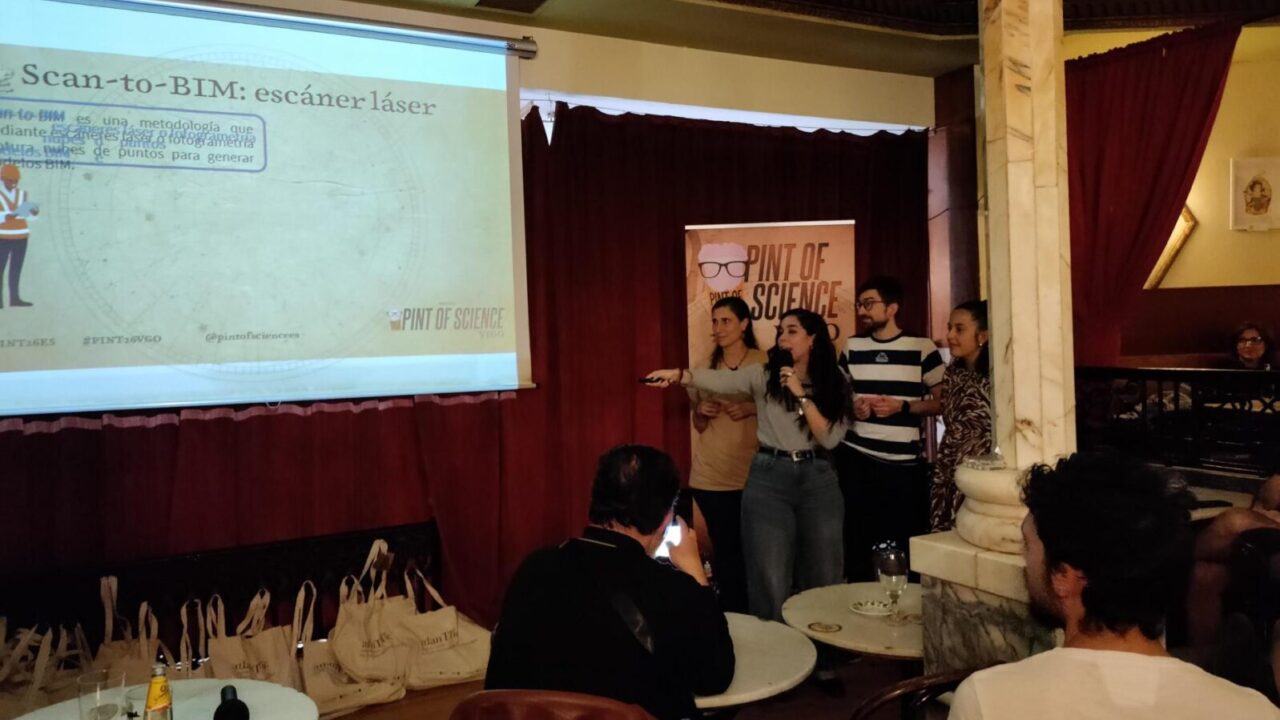
En la sesión posterior, dirigida al público general, Patricia González Cabaleiro participó con el taller “Edificios bajo la luz de la ciencia”, en el que mostró cómo la ingeniería y las nuevas tecnologías de captura 3D, como el LiDAR, permiten analizar estructuras que aparentemente parecen inmóviles, pero que en realidad están sometidas constantemente al paso del tiempo, al clima y a su entorno.
Durante la charla, el público descubrió que los edificios “luchan” de forma continua contra fuerzas invisibles como su propio peso, el viento, la lluvia o el comportamiento del terreno. A través de ejemplos claros, la investigadora explicó qué factores hay que tener en cuenta para que una construcción se mantenga en pie y cómo la investigación científica permite “ver lo que no se ve”, capturando edificios en 3D, analizando su comportamiento y aprendiendo a cuidar su ciclo de vida.