DUVI
Science once again left the laboratories to get closer to the public during the sixth edition of G-Night, held on the last Friday of September in the main cities of Galicia. The University of Vigo coordinated the Galician Night of Researcher and Innovator, with around 40 activities held in Vigo, Ourense and Pontevedra, and the participation of a hundred researchers from the University of Vigo, along with other entities from the Galician research system.
In Vigo, the celebration’s epicentre was at the Redeiras building and Berbés Square, where hundreds of people were able to learn about different areas of research in an open, participatory and accessible way. During the institutional visit to the fair, the Rector of UVigo, Carmen García Mateo, highlighted that ‘a public university must generate knowledge, but also share it and make it understandable and useful for society’.
CINTECX offers five proposals to experiment with science
The Research Center in Technologies, Energy and Industrial Processes (CINTECX) took part in this celebration once again with five outreach activities that allowed the public to discover, in a practical and interactive way, different areas of research developed at the centre. The proposals, organised by researchers from the BIOSUV, GESSMIN, GEOTECH and GTE groups, covered topics related to chemistry, risk detection in infrastructure, plasma, combustion and energy efficiency.
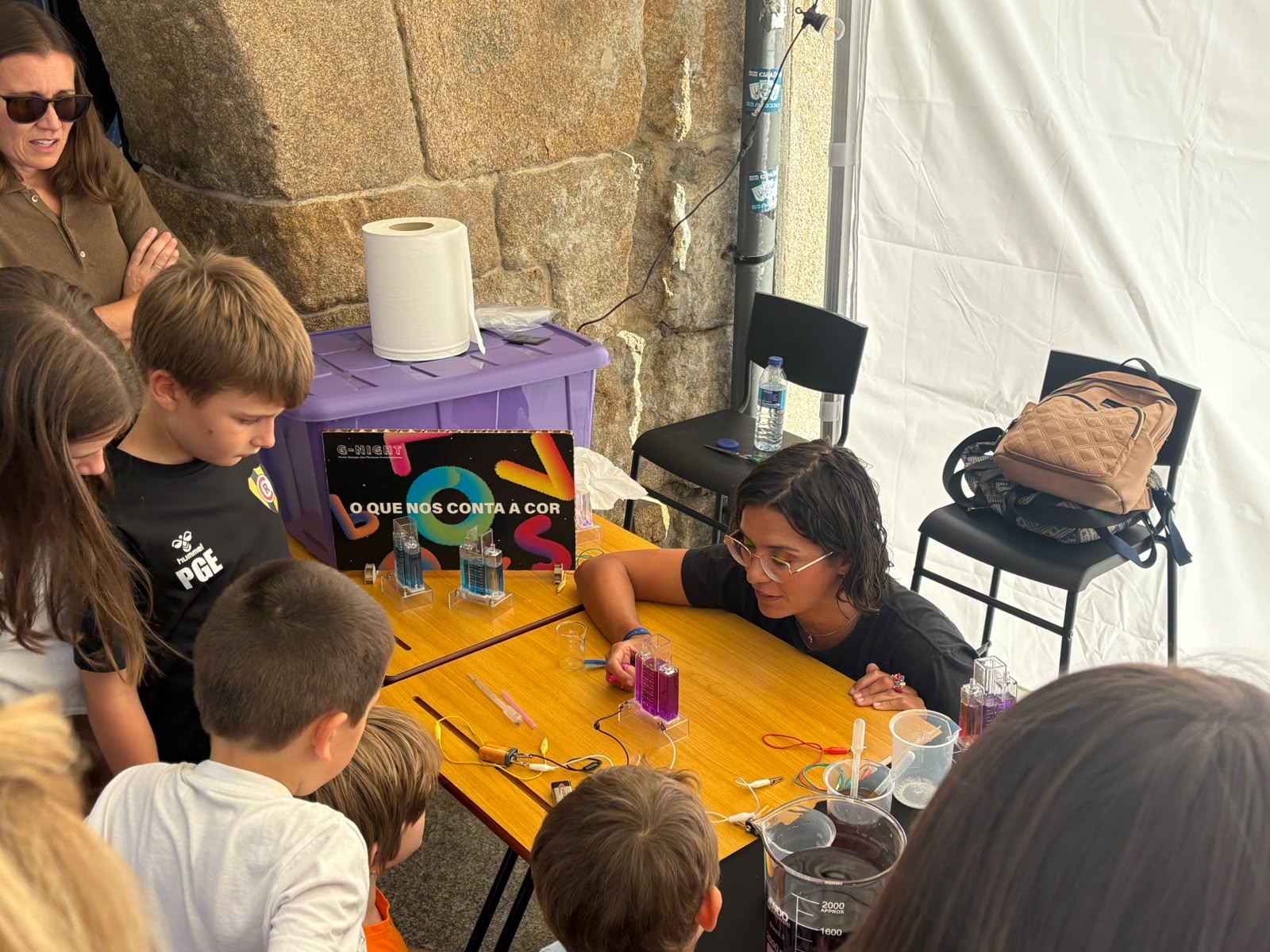
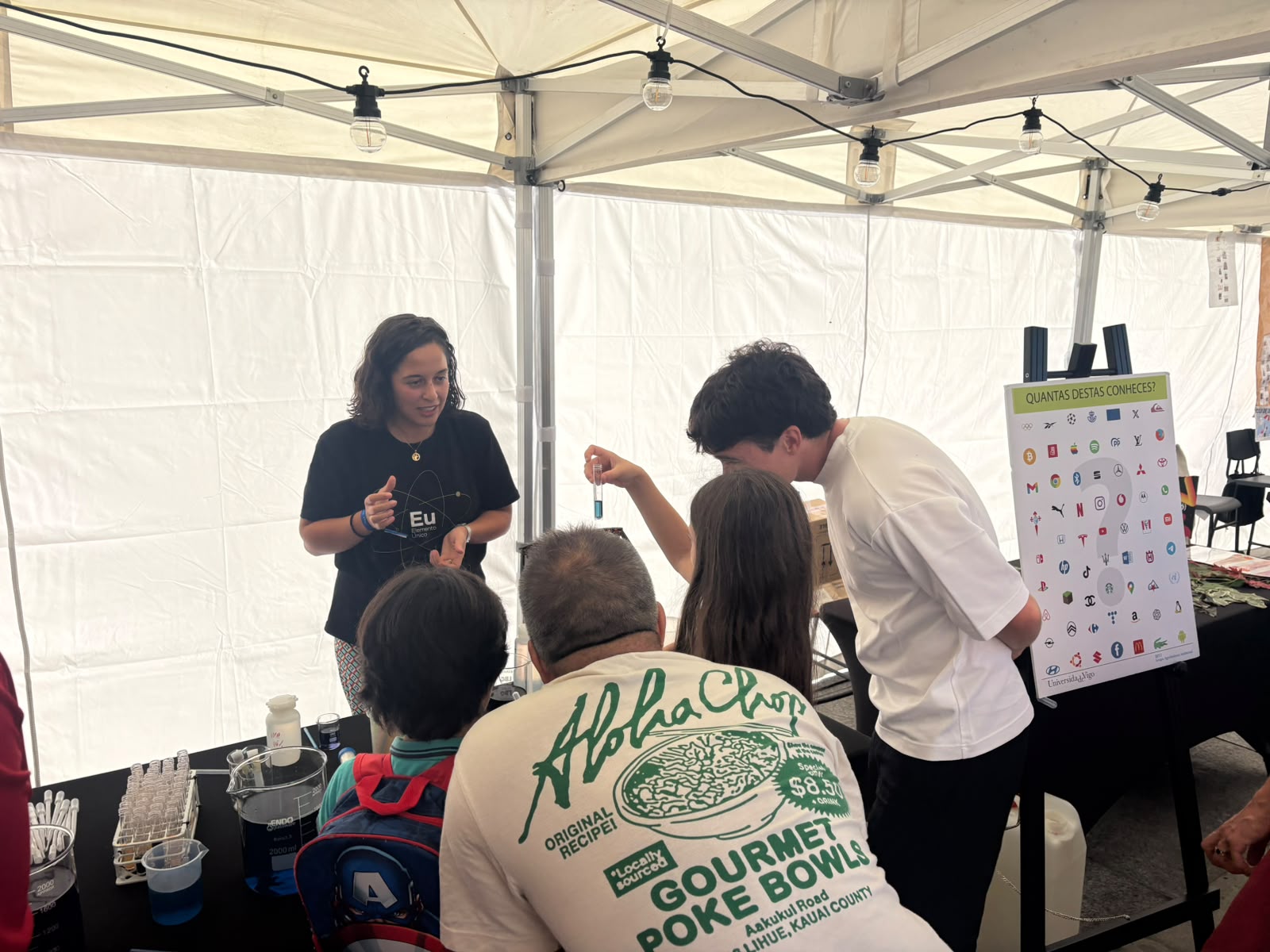
In the Plaza do Berbés, Aida Díez, from the BIOSUV group, and María Pazo, from the GESSMIN group, jointly presented What Colour Tells Us, an activity in which participants could discover how chemical reactions can cause changes in colour and how these transformations allow for the detection of substances that are not visible to the naked eye. Through various experiments, the activity brought chemistry to the public in a visual and participatory way.
At the Redeiras building, the GEOTECH group was present with the activity Infrastructure Detectives, led by Sofía Calvar and Paula Caroline Alves. The proposal allowed attendees to learn about different techniques used in the advanced detection of road risks, from remote techniques and artificial intelligence to BIM methodologies and the integration of non-destructive tests. Attendees were also able to learn about the results of the OVERSIGHT and RADAR-EYE projects, discovering how these tools can contribute to the study and safety of infrastructure.
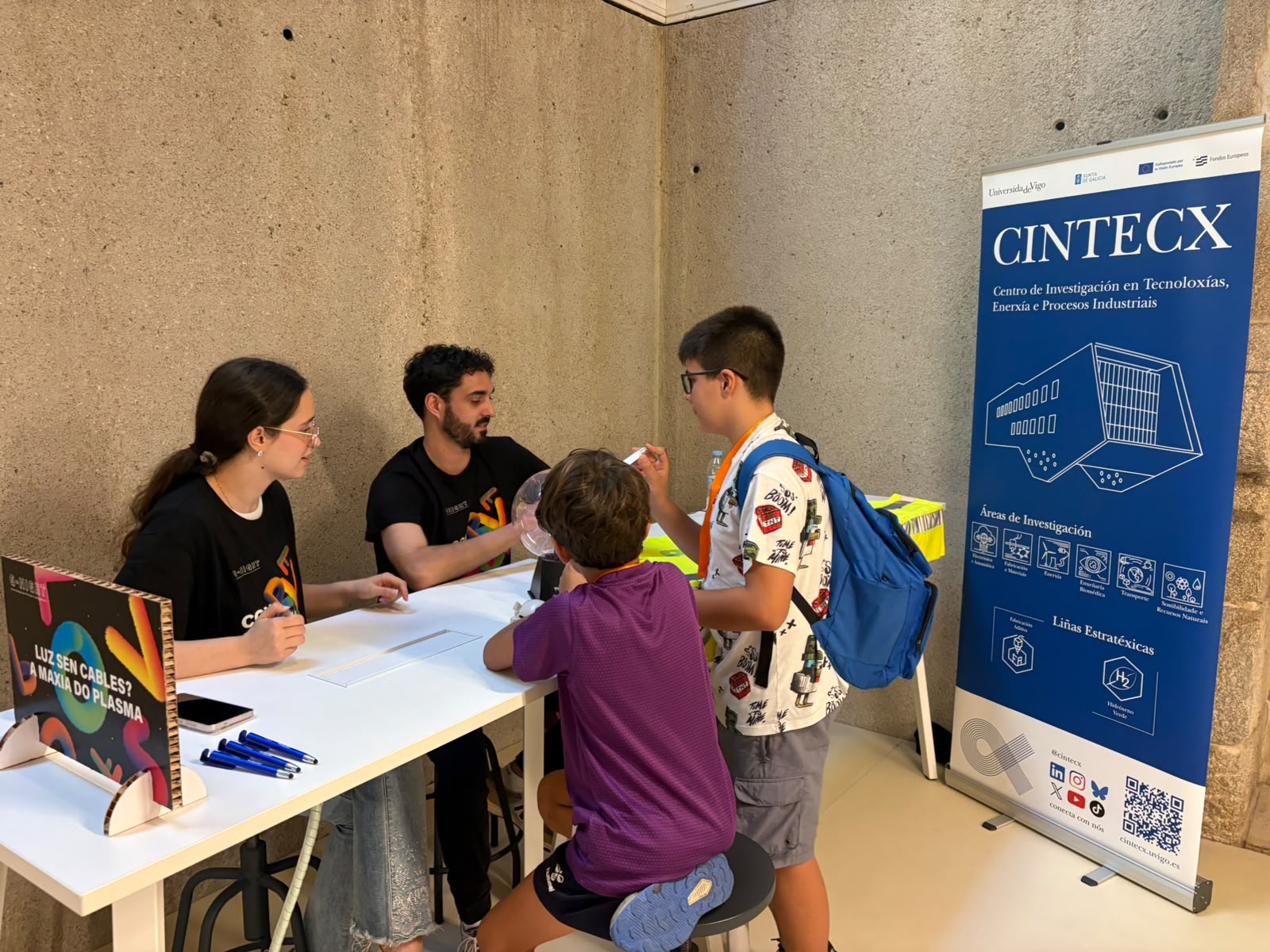
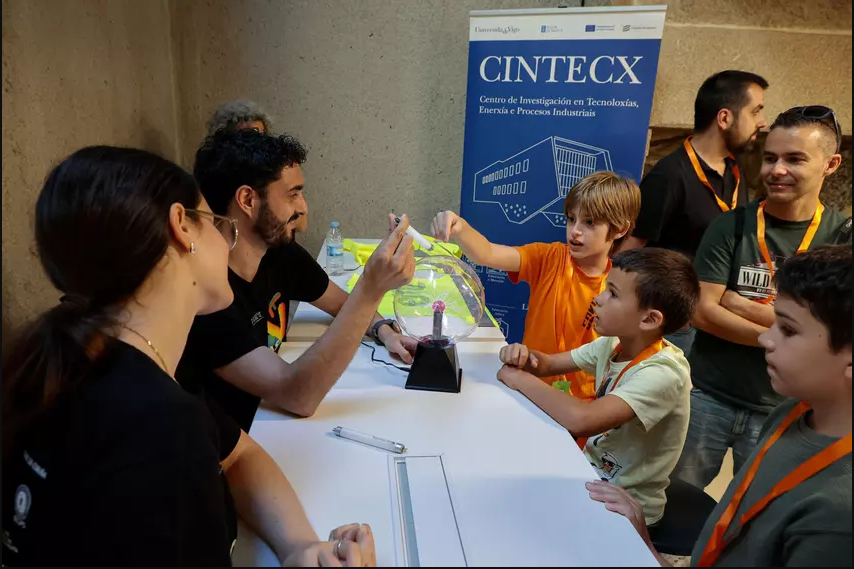
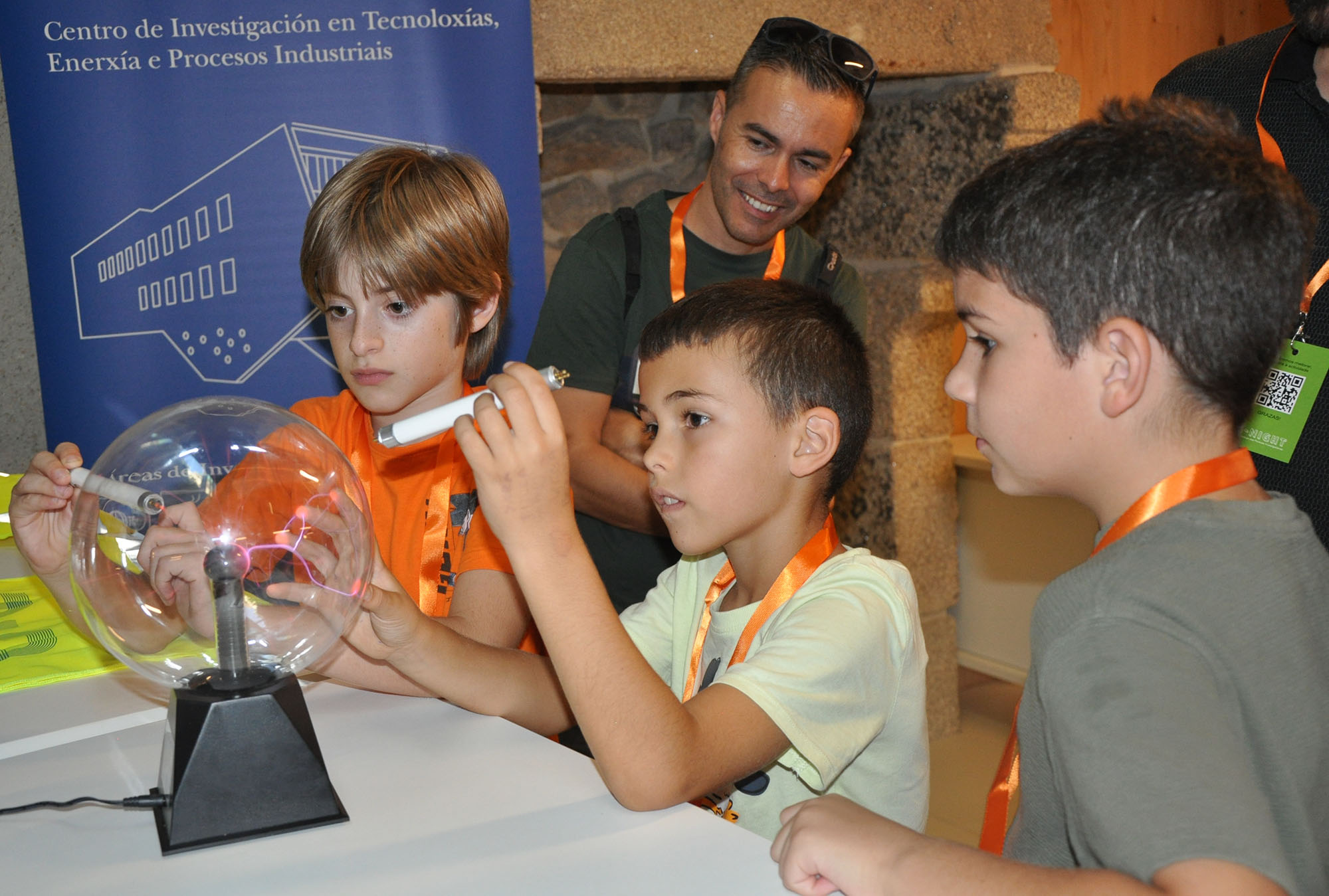
The activity Wireless Light? The Magic of Plasma, developed by Amanda Franco and Pablo López from the GTE group and the School of Mining and Energy Engineering, introduced the public to the so-called fourth state of matter. Using a plasma ball, participants were able to see for themselves how it is possible to light a fluorescent tube without wires or direct contact, observing the effect of the electric field first-hand.
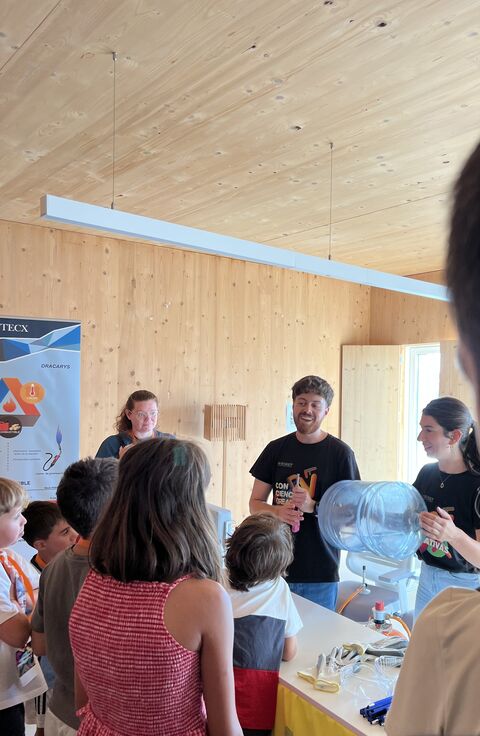
Also from the GTE group, Noelia Bouzas and Juan José García presented From Fire to Energy, a proposal focused on the workings of combustion. The activity allowed participants to learn about the so-called combustion triangle in a practical way and to see how its three elements determine whether a flame will be sustained or extinguished, before putting their knowledge to the test with a confined flame experiment.
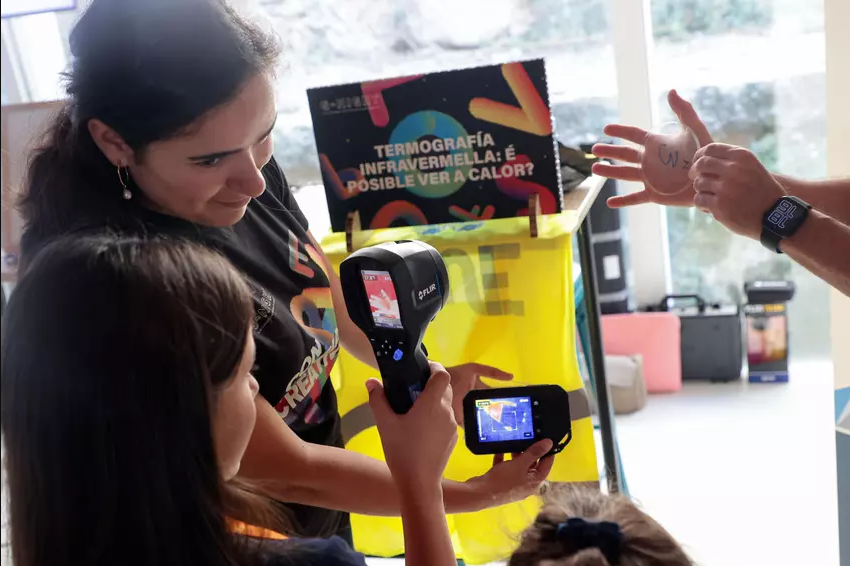
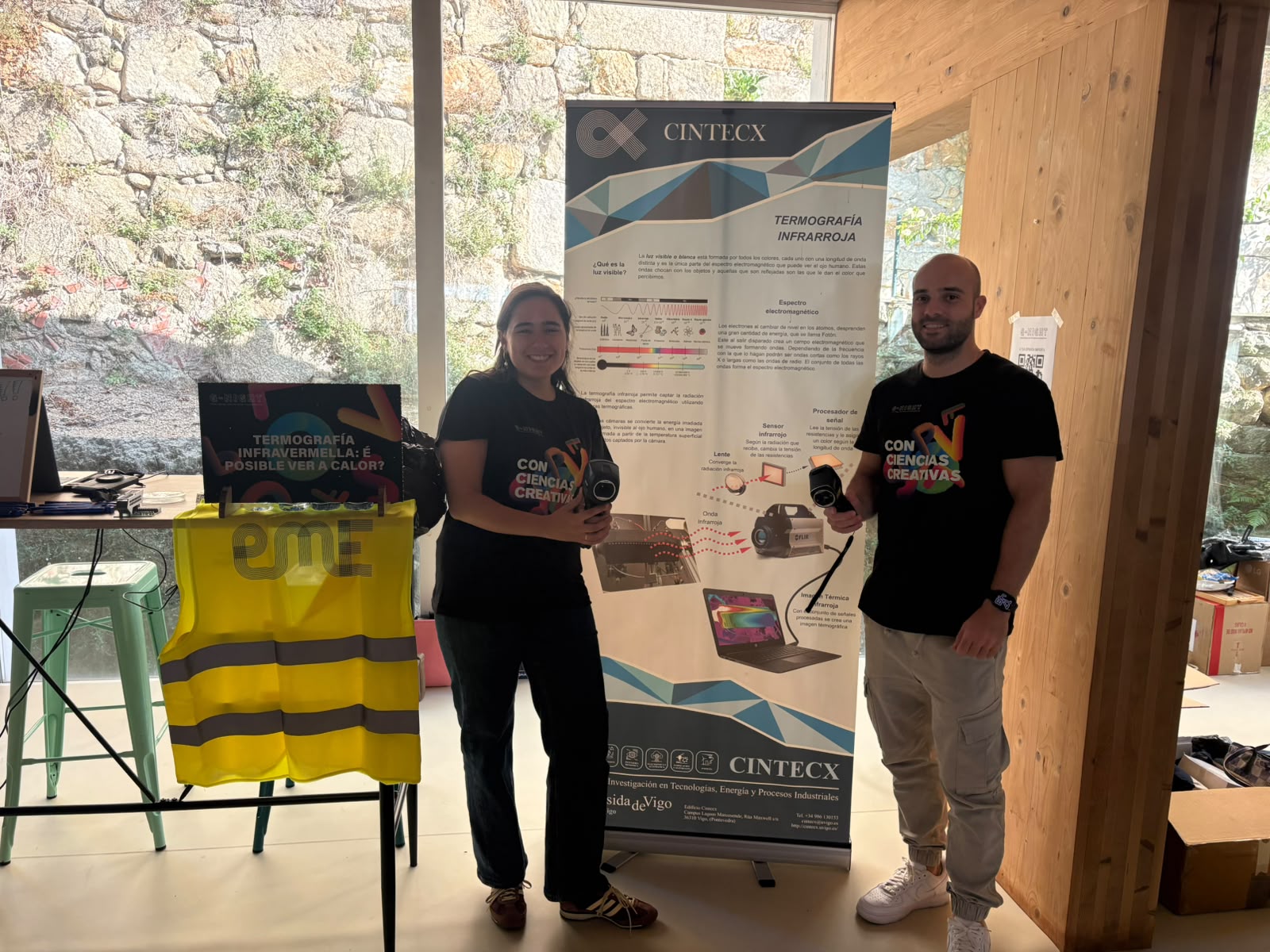
Finally, Marta María Caride and David Rodiño, also from the GTE group and the School of Mining and Energy Engineering, presented Infrared Thermography: Is it possible to see heat? Using a thermal imaging camera, attendees were able to visualise the infrared radiation emitted by bodies and learn about some of the applications of this technology, especially in the field of energy efficiency.
With these five proposals, CINTECX once again brought different areas of research being carried out at the centre to G-Night, offering the public the opportunity to experiment directly with phenomena and technologies that form part of the daily work of its research groups.