

DUVI 19/01/2026
One of the main challenges the European Union is currently facing is the supply of essential raw materials used in clean technologies, such as lithium for electric‑vehicle batteries or copper for electrification, but also in everyday life, such as metals for mobile phones. To move forward in this area, the EU has designed policy initiatives such as the Critical Raw Materials Act (European Commission, 2019), which sets the goal of meeting 10% of the EU’s annual extraction needs by 2030, a target that requires increased mining efficiency.
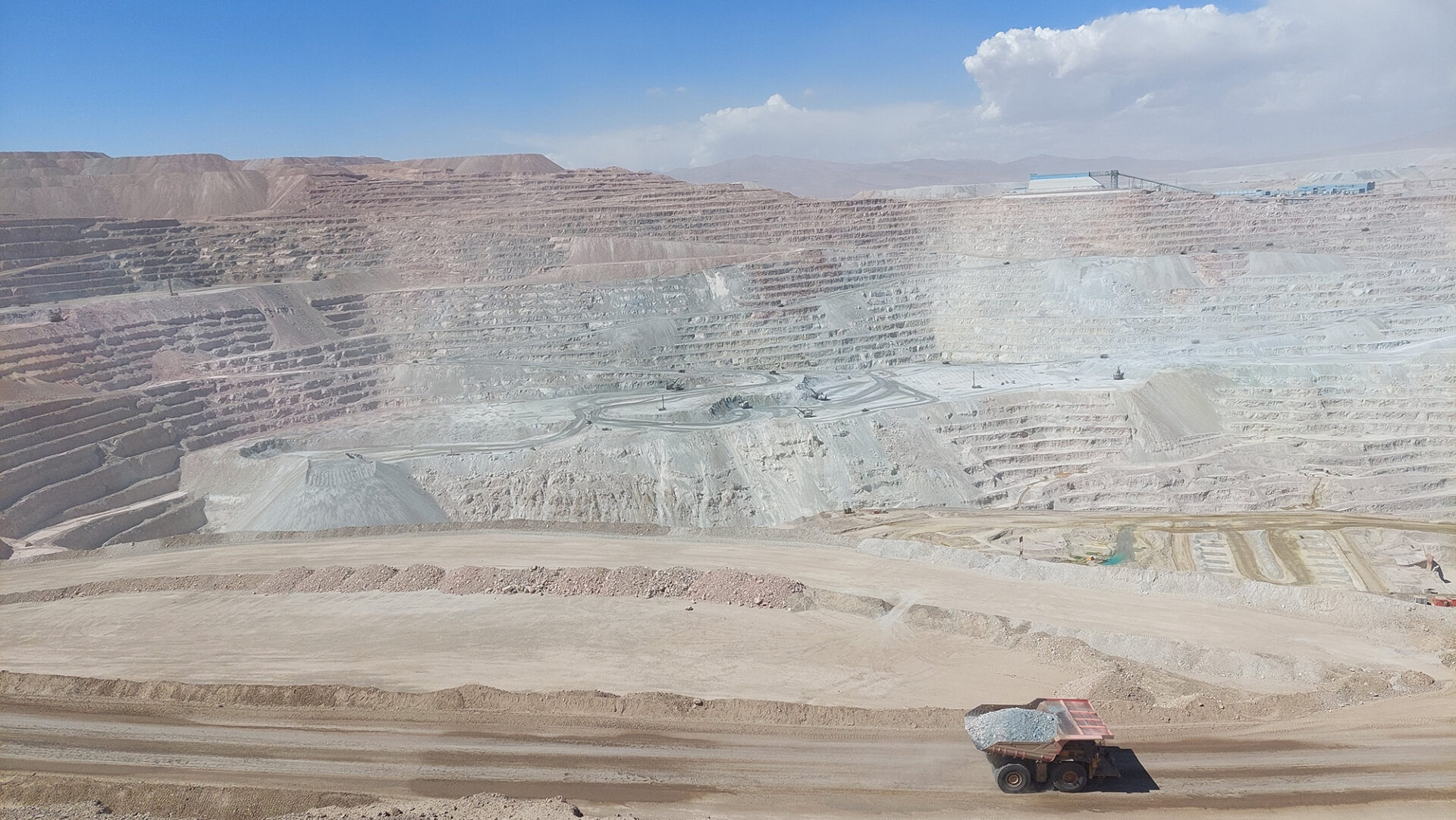
However, it is important to note that mining is responsible for nearly 8% of the global carbon footprint, making it essential to advance innovation lines that help reduce this impact. The Optimalmine project (Slope optimal design for a paradigm shift in mining efficiency, environmental friendliness and resilience), selected under the Horizon Europe call, is one of the initiatives launched to develop a paradigm shift in mining efficiency, environmental sustainability and resilience.
13 universities and companies to transform sustainable mining
The project is coordinated by Newcastle University in the United Kingdom and includes among its partners the University of Vigo, the Polytechnic University of Catalonia and the Mining and Metallurgy Institute Bor Ltd. It also involves universities from Colombia, Australia, Canada, China and the United States, as well as companies from countries such as China, Brazil and Bulgaria.
Leading the UVigo team is Leandro Rafael Alejano, professor in the Department of Natural Resources and Environmental Engineering and researcher in the GESSMin Safe and Sustainable Mineral Resources Management group at Cintecx. As he explains, the main objective of Optimalmine is to advance toward the design of slopes in open‑pit mines that require less excavation of waste rock—materials with no economic value—thus optimizing the mining process.
To achieve these goals, the consortium members rely on “programs based on classical techniques but also on advanced optimization techniques such as machine learning or neural networks,” applying them to real mine cases, “which is why it is important to involve companies.”
Four years to transform the open‑pit mining industry
The project began in September and has 48 months of work ahead, with a budget of around €1.1 million, of which €70,140 correspond to UVigo. The aim is the topological optimization of slopes as a proposal for a paradigm shift: more vertical and automated designs that allow less rock to be excavated without compromising safety.
The consortium’s approach is based on topological optimization of the slope, introducing two paradigm shifts. On the one hand, steeper mine walls overall, and therefore more efficient without compromising safety; and on the other, automated design of mine walls. “The proposed solution focuses on a highly innovative approach for open‑pit mines: excavating slope faces according to their optimal topological shape, instead of the current common practice of designing slopes with a constant inclination within each rock layer. The methodology developed by Professor Utili at Newcastle University determines the optimal geometry in the slope plane for a specific factor of safety (FoS), which is significantly steeper than any flat slope.”
According to the project team, topological optimization of slopes has the potential to transform the open‑pit mining industry. If this methodology were adopted by 50% of the more than 5,000 mines worldwide, and considering the average financial and environmental benefits obtained from five case studies published in peer‑reviewed mining journals, the estimates are highly significant: €6.5 billion per year in direct savings due to reduced rock excavation and 200 million tonnes per year of CO₂‑equivalent emissions, which is the measure of carbon footprint in tonnes.

Ignacio Pérez Rey, Leandro Rafael Alejano y Sifan Yuan son los tres representantes de CINTECX en esta iniciativa.